>
Ecommerce Enabler>
The Rise of Social Commerce in Singapore: How Enablers Bridge Instagram, TikTok and Shopee
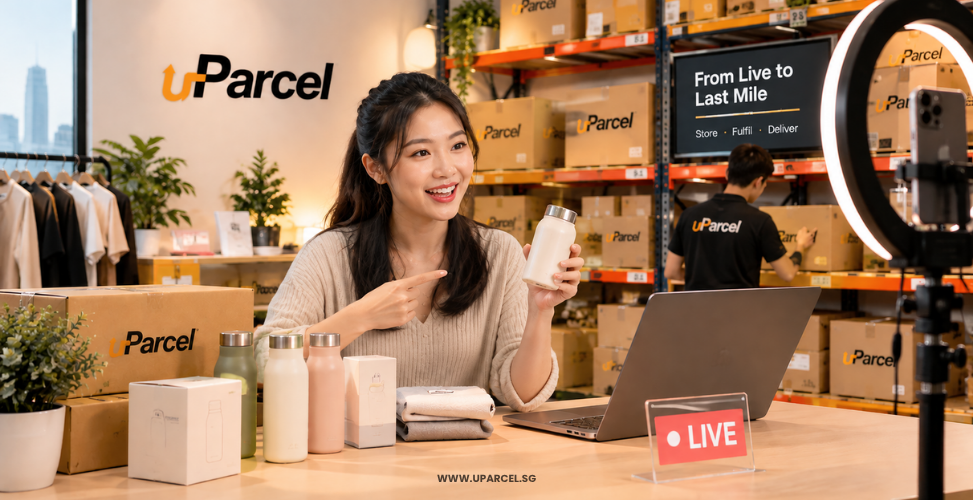
The Rise of Social Commerce in Singapore: How Enablers Bridge Instagram, TikTok and Shopee

Er Cai Fang
Senior Product Manager
Social commerce is reshaping how Singaporeans discover and buy online. See how ecommerce enablers bridge TikTok, Instagram and Shopee and what your logistics need to keep up.
The Rise of Social Commerce in Singapore: How Enablers Bridge Instagram, TikTok and Shopee
Singaporeans are not just browsing social media; they are buying through it. A product demo on TikTok, a recommendation in an Instagram Reel, a Shopee Live flash deal that ends in 15 minutes: the line between content and commerce has effectively disappeared in Singapore's digital economy.
For sellers, this creates enormous opportunity and a very specific operational problem. Social commerce generates demand faster than most sellers can fulfill it. When a live session runs on TikTok and 200 orders come in over 40 minutes, the seller who already has their products warehoused, their studio ready, and a logistics partner standing by will dispatch everything same day. The seller who is managing it alone will still be packing at midnight.
This article covers what social commerce actually is, how it is reshaping the Singapore ecommerce landscape, and why the sellers who scale it successfully treat the entire operation from live content to last-mile delivery as one connected system.
What Is Social Commerce?
Social commerce is the process of discovering, evaluating, and purchasing products directly within or immediately triggered by a social media platform.
It is distinct from traditional social media marketing, where content drives traffic to a separate website or marketplace listing. In social commerce, the purchase moment happens at the point of content consumption. A viewer watches a TikTok Live session, sees a product demonstrated, taps to add to cart, and checks out, without leaving the app.
In Singapore, the platforms driving this behaviour are:
-
TikTok Shop - in-app product listings, shoppable videos, and live selling
-
Instagram Shopping - product tags in Reels, Stories, and feed posts linking directly to listings
-
Shopee Live - real-time live selling embedded within Singapore's largest marketplace
-
Facebook Shops - catalogue-based commerce within the Meta ecosystem
Each platform attracts different buyer behaviours and places different demands on sellers. The challenge is that the most successful social commerce brands in Singapore are not choosing one, they are operating across multiple simultaneously.
How Social Commerce Is Growing in Singapore
Singapore has one of the highest social media penetration rates in Southeast Asia. TikTok's per-capita usage in Singapore ranks among the highest globally, and Shopee Live has become a primary discovery channel for beauty, fashion, and electronics categories. The shift is not experimental; it is mainstream.
Three patterns are now well established in the Singapore market:
-
Live commerce is the new storefront. Consumers expect real-time product demonstrations, Q&A, and exclusive deals not static listing pages. Brands that show up live are building a different kind of trust than brands that do not.
-
Social proof now drives purchase decisions more than product copy. Comments, reactions, creator recommendations, and real-time viewer counts create the kind of peer validation that traditional product descriptions cannot replicate.
-
Purchase windows are shrinking. A viewer who sees something in a TikTok Live session wants to act within seconds. Every second of friction between discovery and checkout is a sale that does not happen.
For sellers, the message is clear: the brands generating demand through social content are growing faster than the brands that are not. The question is whether the backend can keep up.
The Three-Platform Reality: Instagram, TikTok, and Shopee
Most Singapore social commerce sellers operate across at least two of these three channels simultaneously. Each plays a distinct role in the buyer journey.
Instagram: Discovery and Brand Building
Instagram functions primarily as a discovery and aspiration platform. Reels and Stories create awareness; product tags allow creators and brand accounts to link directly to product pages or storefronts. For lifestyle, beauty, fashion, and F&B categories, Instagram is often where consumers first encounter a brand through creators, not ads.
The operational implication: Instagram drives top-of-funnel demand that converts on other platforms, Shopee, your own website, TikTok Shop. A post that gains traction can spike orders within hours. If inventory or fulfillment is not ready for that, you miss the window.
TikTok: Live Selling and Impulse Purchase
TikTok Shop has moved the fastest of any platform in shifting Singapore consumers from content to commerce. TikTok Live sessions allow sellers to demonstrate products in real time, run limited-time offers, and complete full purchase transactions without leaving the app. The format is inherently high-conversion when executed well.
The operational implication: TikTok Live creates concentrated, unpredictable demand spikes. A seller doing 20 orders on a normal day might move 250 during a promoted Live session. If picking, packing, and dispatch cannot scale within hours, TikTok and Shopee's seller performance metrics take a hit which affects the algorithm visibility that made the spike possible in the first place.
For a deeper breakdown of TikTok Shop mechanics and strategy in Singapore, the post on TikTok Shop live commerce strategy for Singapore covers what sellers need to know.
Shopee: The Checkout and Trust Layer
Even among social commerce-first buyers, Shopee often remains the final point of purchase. Many Singapore consumers discover a product on TikTok or Instagram, then search for the same product on Shopee where they have stored payment methods, Shopee Coins, and a history of reviews they trust. Shopee converts the intent generated elsewhere.
The operational implication: Shopee is where fulfillment expectations are enforced. Non-Fulfilment Rate (NFR) and Late Shipment Rate metrics result in penalties, reduced visibility, and loss of preferred seller status. Social channels driving volume spikes that your backend cannot absorb will always show up in your Shopee metrics.

Why Social Commerce Demands a Different Operational Setup
Traditional marketplace selling follows a predictable rhythm: steady order volume, scheduled pick-and-pack runs, and consistent dispatch windows. Social commerce breaks every one of those assumptions.
|
Traditional Marketplace Selling |
Social Commerce |
|
Steady, predictable daily order volume |
Unpredictable spikes driven by live sessions and viral content |
|
Orders come from one platform |
Orders come from multiple platforms simultaneously |
|
Customers find products via search |
Products discovered via content, impulse drives the purchase |
|
SLA window: next business day acceptable |
Customer expectation set in the live session: same day |
|
Inventory planning based on historical trends |
Stock must be pre-positioned before every live session |
For sellers managing this alone taking orders on TikTok, processing manually, printing labels, packing, and arranging delivery, the operational load becomes the ceiling on growth. The moment a live session goes well is also the moment the back-office cracks.
One Place for Everything: From Live Studio to Last-Mile Delivery
This is where the operating model for social commerce changes. Rather than managing content, inventory, and logistics as three separate work streams, the sellers who scale consistently are running them as one integrated operation.
uParcel's Ecommerce Enabler is built around exactly this model, a single partner that handles every layer of the operation, so the seller's only job is to show up and sell.
Here is what that looks like end to end:
Step 1: Shoot Your Live Session at the uParcel Live Studio
uParcel provides a dedicated live commerce studio that sellers can use to produce their TikTok Live and Shopee Live sessions professionally. Proper lighting, a clean backdrop, and a camera-ready setup without the overhead of building your own studio space or the inconsistency of selling from a home setup.
Critically, the studio is co-located with the fulfillment warehouse. That means the products you are featuring in your live session are physically in the same building. You can confirm stock in real time, pull items for demonstration, and have the team begin packing orders while the live session is still running.
Step 2: Your Inventory Is Already Stored On-Site
Products are warehoused at uParcel's fulfillment facility. Before a live session, the team knows exactly what stock is available, no last-minute counting, no discovering mid-session that a featured SKU is out of stock. For sellers running frequent live sessions, this removes one of the most common and damaging sources of friction: promising a product on camera that you cannot actually ship.
Step 3: Orders Are Picked and Packed Immediately
Orders generated during the live session are fed directly into the fulfillment workflow. Pick-and-pack begins while the session is still active. By the time the stream ends, a significant portion of the orders from the first 30 minutes are already packed and ready for dispatch.
uParcel's Social Live Commerce Amplifiers service is purpose-built for this sequence, ensuring that the logistics side of a live session is as well-prepared as the content side.
Step 4: Same-Day or Last-Mile Delivery Across Singapore
Packed orders are dispatched the same day via uParcel's island-wide delivery network. For orders placed before the cutoff window, customers receive their items the same day, matching the immediacy of the purchase experience they had during the live session.
For sellers managing multi-channel volume across Shopee, TikTok Shop, and Instagram simultaneously, uParcel's Ecommerce Fulfillment handles all channels through one backend, no separate workflows, no manual reconciliation.
If you are evaluating which platform to prioritize before committing to this kind of setup, the guide on Shopee, Lazada, TikTok Shop or Shopify is a useful starting point.
Social Commerce Is a Logistics Problem as Much as a Content Problem
The sellers who win in Singapore's social commerce market are not necessarily the ones with the best content; they are the ones who have solved the operational layer behind it. Good content creates demand. A well-run operation is what turns that demand into delivered orders, 5-star reviews, and repeat buyers.
The uParcel model, live studio, warehoused inventory, immediate pick-and-pack, and same-day delivery removes the ceiling that manual operations place on growth. When the live session works, the business can actually fulfill what it sold.
Social commerce in Singapore is not a trend to watch. It is already the mainstream for a growing share of categories. The question is whether your operations are built to match the pace of what your content can generate.
Looking to build a social commerce operation that runs end to end from a live session to doorstep? uParcel's team can walk you through what this looks like for your product category and sales volume. Get in touch to explore your options.
Other Blog Posts
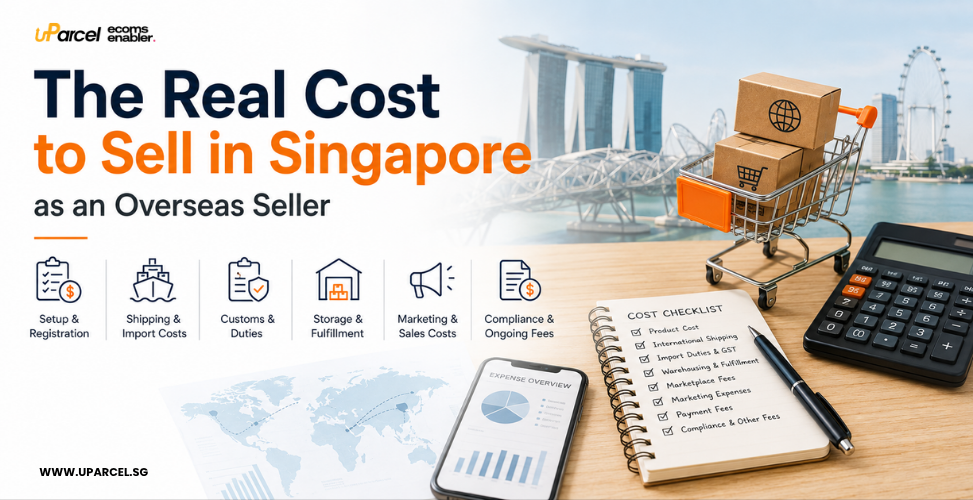
The Real Cost to Sell in Singapore as an Overseas Seller
Singapore is one of Southeast Asia's most attractive ecommerce markets, with high consumer spending, strong digital adoption, and a compact geography that makes last-mile delivery efficient. But for overseas sellers, the cost of entering and running an ecommerce operation here is often significantly higher than initial estimates suggest. The problem is not that Singapore is expensive to enter. It is that the cost picture is spread across multiple categories, business registration, customs, warehousing, fulfillment, platform fees, marketing, and sellers who budget for one or two of these are routinely caught out by the others. This guide breaks down every cost category an overseas seller will face in Singapore in 2026, with realistic SGD ranges at each stage. The goal is a complete picture so you can plan your entry with numbers that reflect reality, not optimistic assumptions. Two Types of Costs: One-Time Setup vs Monthly Running Before getting into individual line items, it helps to separate the cost structure into two buckets: One-time or first-year setup costs - incurred once to get the business legally registered and operationally ready. These do not recur at the same scale in year two and beyond. Monthly running costs - the ongoing operational cost of selling in Singapore every month: storage, fulfillment, delivery, platform fees, and marketing. Most overseas sellers underestimate the setup costs and overestimate the monthly costs when, in reality, the monthly costs are the more significant burden over time because they scale with your order volume. Phase 1: Business Registration and Corporate Setup To sell on Singapore marketplaces and hold inventory locally, you need a Singapore-registered entity. Here is what that costs. ACRA Incorporation Registering a Private Limited Company (Pte. Ltd.) with ACRA involves two government fees: Business name application: SGD 15 Company incorporation filing: SGD 300 Government fees total: SGD 315, but you will almost always engage a corporate secretarial firm or your ecommerce enabler to handle this, adding a professional service fee. Corporate secretarial firm handling fee: SGD 300–800 (one-time for incorporation) Total ACRA incorporation cost: SGD 615–1,115 Nominee Director Singapore law requires every company to have at least one locally resident director. Overseas sellers typically fulfill this through a nominee director service. Nominee director fee: SGD 800–2,500 per year, depending on the provider and the level of liability the nominee assumes. This is an annual recurring cost, it renews every year the company remains active with an overseas-based sole director. Registered Office Address Every Singapore company requires a local registered address for ACRA records. Virtual office or registered address services are standard. Registered office address: SGD 150–350 per year Ongoing Corporate Secretary Singapore law requires a qualified company secretary to be appointed within six months of incorporation. This is a mandatory annual function, not optional. Corporate secretary annual retainer: SGD 300–800 per year (often bundled with nominee director) Phase 1 Summary: One-Time Corporate Setup Cost Item Estimated SGD Range ACRA incorporation (govt fees + handling) SGD 615–1,115 Nominee director (first year) SGD 800–2,500 Registered office address (first year) SGD 150–350 Corporate secretary (first year) SGD 300–800 Phase 1 Total (Year 1) SGD 1,865–4,765 Phase 1 Total (Year 2+, recurring) SGD 1,250–3,650/year Phase 2: Inbound Shipping and Customs Clearance Getting your goods from your home country into a Singapore warehouse is the second major cost category and one that varies significantly by origin. International Freight (Inbound to Singapore) Air freight (recommended for first inbound shipment and ongoing replenishment under 500kg): Origin Air Freight Rate (per kg) Est. Cost for 50kg shipment Malaysia SGD 2–5/kg SGD 100–250 Hong Kong SGD 6–10/kg SGD 300–500 Australia SGD 8–15/kg SGD 400–750 UK / Europe SGD 12–20/kg SGD 600–1,000 Sea freight LCL (Less than Container Load) cost-effective for larger shipments above 1 CBM: SGD 100–350 per CBM depending on origin, carrier, and surcharges Minimum charge typically 1 CBM Transit time: 3–25 days depending on origin Singapore Customs Import Permit Every goods declaration through Singapore Customs' TradeNet system incurs a permit fee. TradeNet permit declaration fee: SGD 2.88 per permit Freight forwarder or customs agent handling fee: SGD 50–200 per consignment depending on complexity Import GST Singapore levies 9% GST on the CIF value (Cost + Insurance + Freight) of imported goods. For most ecommerce inventory: Goods valued above SGD 400 per consignment: GST applies on full CIF value Goods valued under SGD 400 per parcel (individual consumer imports): GST still applies, but typically collected at the platform level for OVR-registered overseas businesses Practical implication: A SGD 3,000 stock shipment (CIF value) will attract SGD 270 in import GST. This is a cash flow cost recoverable as an input tax credit only if your Singapore company is GST-registered. Phase 2 Summary: Per Inbound Shipment Cost Item Estimated SGD Range Air freight (50kg from Malaysia) SGD 100–250 Air freight (50kg from Australia) SGD 400–750 Customs permit + agent handling SGD 53–203 Import GST (9% on CIF value) Varies — ~9% of shipment value Typical per-shipment total (Malaysia) SGD 200–500 Typical per-shipment total (Australia) SGD 600–1,200 Phase 3: Warehouse Storage and Inventory Management Once goods arrive in Singapore, they need to be stored in a warehouse connected to your fulfillment operation. Warehouse Storage Rates Singapore's commercial warehouse space is among the most expensive in Southeast Asia. Outsourced storage through a 3PL or fulfillment provider is typically more cost-effective than leasing your own space. Ambient (general dry) storage: SGD 80–150 per pallet per month for standard non-perishable ecommerce inventory Per CBM pricing (for non-pallet storage): SGD 25–50 per CBM per month Temperature-controlled or cold chain storage: SGD 200–400 per pallet per month for food, health supplements, cosmetics requiring refrigeration GDPMDS-certified pharma storage: SGD 350–600 per pallet per month for regulated medical devices and pharmaceutical products requiring full chain-of-custody documentation Most overseas sellers starting out will occupy 0.5–2 pallets of ambient storage meaning SGD 40–300 per month depending on inventory volume. Use uParcel's storage quotation tool to calculate exact storage costs for your specific inventory footprint. Goods Receiving Fee When a new inbound stock shipment arrives at the warehouse, a receiving fee covers the labour of unloading, counting, checking, and booking inventory into the system. SGD 20–60 per inbound consignment (flat fee) SGD 0.30–0.80 per unit (unit-level receiving, for high-SKU shipments) Phase 4: Pick and Pack Fulfillment This is the cost most sellers underestimate and the one the user specifically highlighted. Every order that ships from the warehouse incurs pick and pack fees. These are not included in storage and are not part of last-mile delivery. They are a discrete cost category. Pick Fee Charged per item selected from the shelf for each order: SGD 0.50–1.50 per item picked An order with 2 items: SGD 1–3 in pick fees Pack Fee Charged per order for the labour and materials used to pack the parcel: SGD 1.50–3.50 per order for standard poly mailer or brown box packing SGD 0.50–2.00 additional for branded packaging inserts, tissue wrapping, thank-you cards, or kitting Packaging Materials If the 3PL provides packaging: Poly mailer (standard): SGD 0.20–0.50 each Brown box (small): SGD 0.50–1.20 each Bubble wrap or void fill: SGD 0.10–0.30 per order Sellers who supply their own branded packaging to the warehouse reduce this cost but incur the cost of purchasing packaging in bulk from their own supplier. Consolidated Pick and Pack Cost Per Order Order Type Estimated SGD Range Single-item standard order (poly mailer) SGD 2.00–5.00 Two-item order with standard packing SGD 3.50–7.00 Single-item branded packaging (tissue + insert) SGD 3.50–7.50 Kitted bundle order (multiple components) SGD 5.00–12.00+ Phase 5: Last-Mile Delivery Across Singapore After pick and pack, the parcel enters the local Singapore delivery network. This is a separate cost from fulfillment. Standard next-day delivery (under 5kg): SGD 3.50–6.00 per parcel Same-day delivery: SGD 6.00–12.00 per parcel Express 1-hour or 3-hour delivery: SGD 12.00–25.00 per parcel Bulky or oversized items (above 5kg or large dimensions): SGD 8.00–20.00+ depending on size and weight. For sellers with high monthly volume, negotiated bulk delivery rates apply reducing per-parcel costs significantly at scale. Most 3PL providers pass on volume discounts once you exceed 200–500 parcels per month. Phase 6: Platform Fees - Shopee, Lazada, and TikTok Shop Every sale made on a Singapore marketplace incurs platform fees. These are percentage-based costs on your Gross Merchandise Value (GMV) and are often overlooked in early cost planning because they do not appear until you are selling. Commission Fees (as a % of the sale price) Platform Category Commission Range Shopee Singapore 2.0% – 6.0% depending on category Lazada Singapore 2.0% – 7.0% depending on category TikTok Shop Singapore 2.0% – 5.0% depending on category Lifestyle, fashion, and electronics categories are typically at the lower end. Health, beauty, and food categories often attract higher commission rates. Transaction Fees In addition to commission, platforms charge a payment processing or transaction fee: Shopee SG: approximately 2.1% per transaction Lazada SG: approximately 2.0% per transaction TikTok Shop SG: approximately 2.0% per transaction What This Means Per Sale On a SGD 50 sale via Shopee Singapore (4% commission + 2.1% transaction fee): Commission: SGD 2.00 Transaction fee: SGD 1.05 Platform cost per SGD 50 sale: approximately SGD 3.05 (6.1%) At SGD 5,000/month GMV, platform fees total approximately SGD 300–400/month. Free Returns Window Shopee and Lazada both operate return policies. Sellers absorb the return logistics cost where the return is accepted. Budget approximately 1–3% of GMV for returns handling including reverse logistics and restocking labour. Phase 7: Marketing and Advertising A new overseas brand entering Singapore with zero platform history and zero local reviews cannot rely on organic search ranking alone. Some level of paid promotion is required in the first 3–6 months to build visibility, drive initial sales, and accumulate reviews. Shopee and Lazada Sponsored Products Both platforms offer PPC (pay-per-click) sponsored listing products. Budget for a new seller: SGD 200–800/month — sufficient for category keyword coverage on a focused product range Cost-per-click on Shopee SG: SGD 0.10–0.80 depending on keyword competition TikTok Shop Ads and Affiliate Programme TikTok Shop's affiliate programme lets sellers pay a commission to creators who drive sales typically 5–15% of the sale price per affiliated order. This is a performance-based cost with no upfront budget required, but it adds to the per-order cost. TikTok Ads CPM for Singapore: approximately SGD 10–30 per 1,000 impressions Total Monthly Marketing Budget (Recommended for New Overseas Sellers) Months 1–3 (establishing platform presence): SGD 500–1,500/month Months 4–12 (scaling with validated products): SGD 1,000–3,000/month Phase 8: Ecommerce Enabler Service Fee If you are engaging an ecommerce enabler to coordinate your Singapore market entry covering registration support, inbound logistics, warehouse fulfillment, and store management, this is a bundled service cost on top of the operational costs above. Ecommerce enabler service structures vary by provider. Common models include: Onboarding / setup fee: SGD 500–2,000 (one-time, covers store setup, system integration, onboarding coordination) Monthly management fee: SGD 500–2,000+/month depending on the scope of ongoing store management, traffic optimization, and operational services included Revenue share model: Some enablers charge a percentage of GMV (typically 3–8%) instead of or in addition to a flat fee The benefit of engaging an ecommerce enabler is that the coordination cost of managing warehouse, fulfillment, delivery, and store management separately across multiple vendors is typically higher in time and risk than a bundled enabler arrangement, particularly at early scale. For a deeper breakdown of what ecommerce enabler service fees cover, this guide on ecommerce enabler costs in Singapore provides service-level detail. uParcel's Ecommerce Enabler covers the full scope from inbound logistics and warehouse fulfillment through to last-mile delivery with pricing based on your specific volume and category requirements. Costs That Frequently Get Missed These are the line items that consistently catch overseas sellers off-guard: Often Missed Cost Typical Range Import GST (9% on inbound stock shipment CIF value) ~9% of shipment value ACRA annual return filing fee (BizFile) SGD 60/year Packaging materials (mailers, boxes, void fill) SGD 0.20–1.50 per order Return handling and restocking fee SGD 3–8 per returned order Platform campaign participation fee (Shopee / Lazada promo slots) SGD 0–500 per campaign Product compliance testing (SFA, HSA, if applicable) SGD 500–5,000+ per SKU Halal certification (MUIS, if applicable) SGD 1,000–5,000/year Professional photography for Singapore-market listings SGD 500–2,000 per product set What It Costs at Different Volume Levels: Two Scenarios Scenario A - Starter: 50 Orders/Month Cost Item Monthly SGD Warehouse storage (0.5 pallet, ambient) SGD 50–80 Pick and pack (50 orders, single item) SGD 100–175 Last-mile delivery (50 parcels, standard) SGD 175–300 Platform fees (~6% of SGD 3,000 GMV) SGD 180 Marketing (early-stage, sponsored listings) SGD 400–800 Nominee director + corp sec (prorated monthly) SGD 90–275 Ecommerce enabler management fee SGD 500–1,000 Monthly Total SGD 1,495–2,810 Cost per order SGD 30–56 Scenario B - Growing: 200 Orders/Month Cost Item Monthly SGD Warehouse storage (2 pallets, ambient) SGD 160–300 Pick and pack (200 orders, single item) SGD 400–700 Last-mile delivery (200 parcels, negotiated rate) SGD 600–1,000 Platform fees (~6% of SGD 12,000 GMV) SGD 720 Marketing (scaling, broader keyword coverage) SGD 800–2,000 Nominee director + corp sec (prorated monthly) SGD 90–275 Ecommerce enabler management fee SGD 800–2,000 Monthly Total SGD 3,570–7,000 Cost per order SGD 17–35 The key insight: cost-per-order drops significantly as volume grows. At 200 orders/month, each order costs roughly half what it costs at 50 orders/month because storage, management, and fixed costs are spread across more transactions. This is why sellers who enter Singapore with realistic volume expectations and a plan to scale tend to reach profitability faster than those who enter at very low volume without a growth plan. Conclusion Selling in Singapore as an overseas seller in 2026 is not cheap in year one, but the cost structure is manageable and predictable when you plan for it in full. The sellers who struggle financially are almost always those who budgeted for one or two cost categories and discovered the rest after they had already committed. The complete cost picture includes: ACRA registration and corporate compliance, inbound freight and customs, warehouse storage, pick and pack per order, last-mile delivery, platform commissions, marketing, and ecommerce enabler service fees if you are using a coordinated market entry partner. At 50 orders/month, expect to spend SGD 1,500–2,800 monthly on operations. At 200 orders/month, that range rises to SGD 3,500–7,000 but your cost per order roughly halves. Plan your budget with every category accounted for, and your Singapore market entry starts from a foundation of accurate expectations rather than optimistic estimates. Want to understand what the warehouse, fulfillment, and delivery components of this cost stack look like specifically for your product and volume? Use uParcel's storage quotation tool for an instant storage cost estimate, and reach out to the Ecommerce Enabler team to discuss fulfillment and market entry costs tailored to your situation.
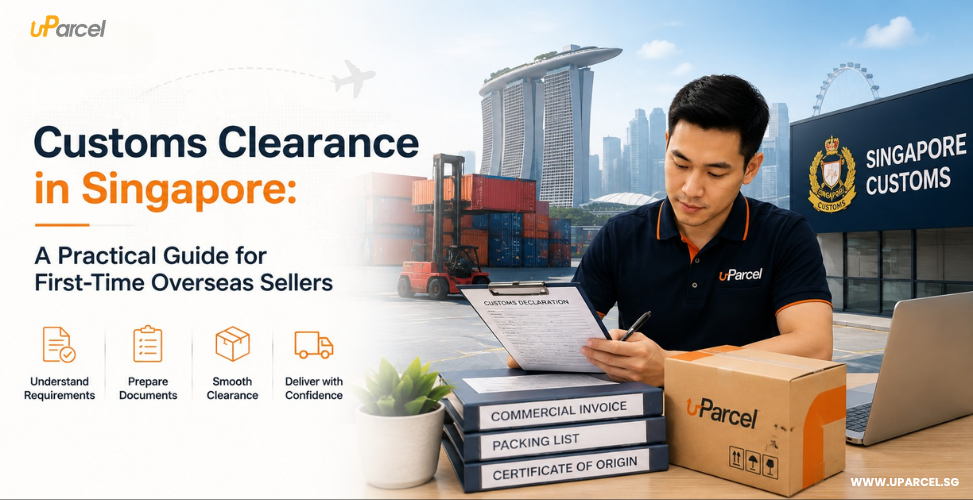
Customs Clearance in Singapore: A Practical Guide for First-Time Overseas Sellers
Importing goods into Singapore for the first time is more straightforward than most overseas sellers expect, but only if you understand what is required before your cargo arrives. Singapore operates one of the world's most efficient trade environments. Customs processing is largely digital, duty rates on most consumer goods are zero, and the regulatory framework is clear and well-documented. That said, first-time importers commonly make avoidable errors: wrong permit types, missing documents, incorrect HS codes, or importing controlled products without the right secondary approvals. This guide walks through the complete customs clearance process for overseas sellers entering Singapore covering every step from regulatory authority to permit type, GST obligation to controlled goods classification. Who Governs Customs in Singapore Singapore Customs is the national authority responsible for regulating customs, excise duties, and trade facilitation. All import declarations in Singapore are submitted through TradeNet, the national single window trade declaration system operated by Singapore Customs. TradeNet is entirely digital. Importers and their appointed freight forwarders or customs agents use TradeNet to submit cargo declarations, apply for import permits, and receive clearance approvals. Physical paperwork is rarely required at the point of entry. Singapore Customs is not the only authority you may need to deal with. For specific product categories, secondary permits from sector regulators are required before goods can be imported and sold: Regulatory Body Products Covered HSA — Health Sciences Authority Pharmaceuticals, medical devices, health supplements, cosmetics SFA — Singapore Food Agency All food and beverage products IMDA — Infocomm Media Development Authority Telecommunications and IT equipment NParks / AVS Plants, animals, and animal-derived products NEA — National Environment Agency Chemicals, hazardous materials, radioactive substances Singapore Police Force (SPF) Arms, ammunition, explosive materials For most ecommerce product categories, fashion, lifestyle, electronics accessories, homeware, and general beauty, Singapore Customs is the primary and only authority required. For health, food, and medical products, secondary permits are mandatory and must be obtained before the goods arrive. Step 1: Classify Your Product with the Correct HS Code Every product imported into Singapore must be assigned a Harmonized System (HS) code, an internationally standardized numerical classification system that determines: The applicable duty rate Whether the product is subject to control or prohibition What secondary permits may be required Singapore uses an 8-digit HS code system. The first 6 digits follow the international standard; the last 2 are Singapore-specific. Why HS code accuracy matters: An incorrect HS code can result in the wrong duty rate being applied Misclassification that results in underpayment of duty or GST is a customs offense Certain HS codes trigger mandatory permit requirements from secondary regulators, misclassifying a product to avoid a regulatory requirement is treated as an attempt at evasion How to find the right HS code: Singapore Customs publishes the complete HS code reference at Singapore Trade Classification, Customs and Excise Duties (STCCED) the official tariff schedule Most freight forwarders and customs agents provide HS code classification as part of their service When in doubt, engage a licensed customs agent to classify your products before your first shipment arrives Step 2: Understand Singapore's Duty Structure Singapore applies zero customs duty on the vast majority of imported goods. This makes it one of the most trade-open economies in the world and significantly reduces the customs cost burden for most ecommerce sellers. Dutiable goods - the exceptions: Category Duty Basis Intoxicating liquors Per litre of alcohol or per litre of product, depending on type Tobacco products Per kilogram Motor vehicles Ad valorem (percentage of value) Petroleum and petroleum products Per litre For the overwhelming majority of ecommerce product categories including fashion, beauty, electronics, homeware, sports goods, food supplements, and lifestyle products, customs duty is 0%. Free Trade Agreements (FTAs): Singapore maintains FTAs with more than 20 trading partners including ASEAN member states, Australia, the United States, the European Union, China, India, and Japan. Under qualifying FTAs, preferential duty rates may apply — relevant primarily for dutiable goods. For sellers importing duty-free goods, FTAs have limited practical impact but may be worth understanding if your category is dutiable. To claim preferential FTA rates, a valid Certificate of Origin (CO) from the country of export is required. Step 3: Understand GST on Imported Goods Singapore's GST (Goods and Services Tax) rate is currently 9%. For overseas sellers importing goods into Singapore, GST applies to the CIF value of the shipment, Cost of goods + Insurance + Freight to Singapore. The OVR Regime - What Changed in 2023 Before January 2023, goods valued at S$400 or below shipped directly to Singapore consumers were exempt from GST. That exemption has been removed. From 1 January 2023, GST applies to all imported goods regardless of value, including low-value goods shipped directly to Singapore B2C buyers. How this works in practice depends on how you sell: Selling through a Singapore marketplace (Shopee, Lazada, TikTok Shop): The marketplace operator is responsible for collecting and remitting GST on imported low-value goods sold to Singapore consumers. You do not need to register for Singapore GST solely because of marketplace sales. Selling directly to Singapore consumers via your own website: If your global annual revenue exceeds S$1 million AND your B2C sales of digital services and/or goods to Singapore customers exceed S$100,000 per year, you are required to register under the Overseas Vendor Registration (OVR) scheme, charge 9% GST, and remit it to IRAS (Inland Revenue Authority of Singapore). Commercial Imports (Bulk Stock to a Singapore Warehouse) If you are importing a bulk shipment of inventory into Singapore, to store and fulfill locally, GST is payable on the CIF value of the entire shipment at the point of import. If your Singapore entity is GST-registered, this import GST can be claimed back as input tax credit. Step 4: Identify the Correct Import Permit Type All commercial imports into Singapore require a valid import permit issued through TradeNet before the goods can be cleared by Singapore Customs. The three most common permit types for ecommerce importers: Permit Type When It Applies In-Payment (Customs Duty and/or GST) For dutiable goods and/or goods where GST is payable the most common permit for commercial stock imports In-Non-Payment (Relief) For goods exempt from GST under specific schemes (e.g., investment precious metals, re-exports) In-Non-Payment (Approved Premises/Schemes) For goods entering Free Trade Zones (FTZs), licensed warehouses, or other approved facilities For most overseas sellers importing ecommerce stock into Singapore for local fulfillment, the In-Payment (GST) permit is the standard requirement. Step 5: Prepare Your Import Documents The following documents are required for a standard commercial import into Singapore: Mandatory for all commercial imports: 📄 Commercial invoice must show seller details, buyer details, product description, HS code, quantity, unit price, total value, and country of origin 📦 Packing list itemised breakdown of the shipment contents, weights, and dimensions 🚢 Bill of Lading (sea freight) or Airway Bill (air freight), issued by the carrier confirming shipment details Mandatory if applicable: 📋 Import permit obtained via TradeNet prior to cargo arrival; cannot clear customs without it 🌐 Certificate of Origin required to claim FTA preferential duty rates 🏥 Secondary regulatory permits HSA approval letters, SFA import permits, IMDA registration, etc. required for controlled product categories 🔬 Product test reports or safety certifications may be required for electronics, children's products, or other regulated categories Important: Singapore Customs may conduct a physical examination of cargo at the port or airport. Having complete, accurate documentation ready significantly reduces the risk of delays during examination. Prohibited and Restricted Goods Some goods cannot be imported into Singapore under any circumstances: Chewing gum (for retail sale, therapeutic gum is permitted with HSA approval) Firecrackers and fireworks Controlled drugs not covered by a valid medical prescription or HSA authorization Counterfeit goods of any kind Obscene publications and materials Certain endangered species and products derived from them (CITES-protected) Attempting to import prohibited goods even unknowingly carries serious legal consequences under Singapore law. If you are uncertain whether your product falls into a restricted or prohibited category, verify with Singapore Customs or a licensed customs agent before shipping. Do You Need a Singapore Entity to Import? Not necessarily, but it depends on your setup. Overseas sellers can import goods into Singapore without a locally registered entity in some circumstances, particularly when using a freight forwarder or third-party logistics provider who holds the relevant licenses and acts as the importer of record. However, establishing a Singapore entity provides distinct advantages: GST registration allows you to claim back import GST as input tax, reducing the effective cost of bringing stock into Singapore ACRA registration, a locally incorporated entity (typically a Private Limited company, or Pte. Ltd.) is required for certain marketplace seller agreements and builds buyer trust Local director requirement: Singapore companies require at least one locally resident director; overseas sellers without a Singapore-based individual typically engage a nominee director service For overseas sellers exploring the full market entry process including ACRA registration, nominee directors, and how customs clearance fits into a broader Singapore ecommerce setup, what overseas sellers need to know about starting in Singapore covers those steps in detail. Working with an Inbound Logistics and Customs Partner Most first-time overseas sellers do not manage Singapore customs directly. The process requires TradeNet access, knowledge of permit types, and familiarity with secondary regulatory requirements, all of which take time to build. The two most common approaches: Option 1: Licensed freight forwarder or customs agent A freight forwarder or licensed customs agent submits TradeNet declarations on your behalf, manages permit applications, and coordinates cargo release. They typically work on a per-shipment fee basis. Option 2: Integrated inbound logistics partner Some providers offer inbound customs clearance as part of a broader Singapore market entry and fulfillment service. This is particularly relevant for overseas sellers who need not just customs clearance but also local warehousing, marketplace management, and last-mile delivery. uParcel's Inbound Customs service, part of the broader Ecommerce Enabler programme handles inbound shipping and customs clearance as part of an end-to-end Singapore market entry service. For sellers who want one partner managing the full chain from first shipment to first delivered order, this removes the need to coordinate between a separate freight forwarder, warehousing provider, and delivery partner. Whichever route you take, the same regulatory requirements apply. The difference is only in who manages the process on your behalf. Key Things to Get Right Before Your First Shipment A checklist for first-time overseas sellers importing into Singapore: ✅ HS code verified - classified correctly before shipping, not guessed at the border ✅ Secondary permits secured in advance - HSA, SFA, or other approvals for controlled product categories obtained before goods arrive ✅ Commercial invoice is complete and accurate - product description, quantity, value, country of origin, HS code all included ✅ Import permit applied for via TradeNet - before cargo arrives at Singapore port or airport ✅ GST obligations understood - whether you are selling through a marketplace or direct-to-consumer, know who is responsible for collecting and remitting GST ✅ Packing list matches shipment contents exactly - discrepancies between declared and actual contents are a common cause of customs delays Getting Customs Right Sets Up Everything That Follows Customs clearance is the entry point to the Singapore market and the step where most first-time importers encounter unexpected delays, additional costs, or compliance issues that could have been avoided with preparation. Singapore's regulatory framework is clear and well-managed. Once you understand the permit structure, GST obligations, document requirements, and controlled goods classifications relevant to your product, the process becomes repeatable and predictable. Getting it right on the first shipment with the correct HS codes, complete documentation, and the right permits in place creates a template you can follow for every shipment that follows. If you are an overseas seller preparing your first shipment to Singapore and want guidance on inbound customs clearance alongside warehousing, marketplace setup, and local fulfillment, uParcel's team is available to walk through what applies to your specific product category and shipping route.
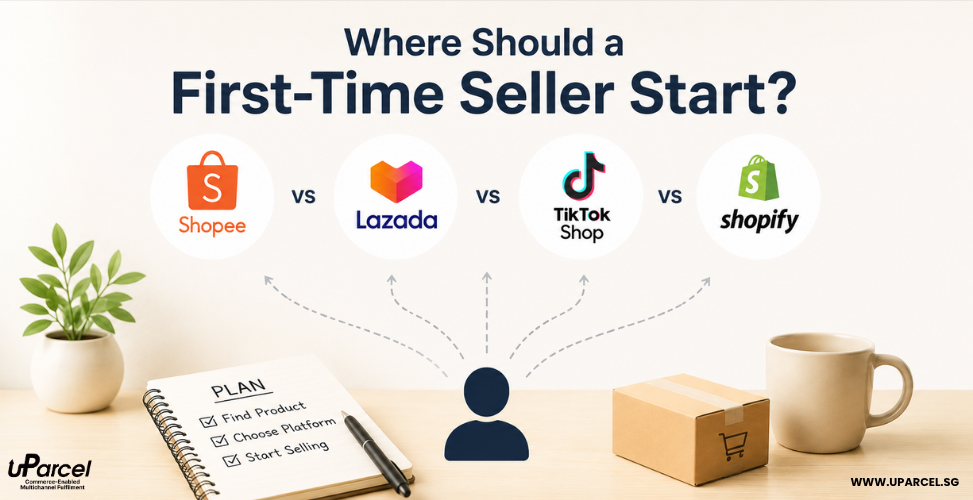
Shopee vs Lazada vs TikTok Shop vs Shopify: Where Should a First-Time Seller Start?
Choosing where to sell first is one of the most consequential decisions a new Singapore seller makes and one of the most confusing. Each platform has its own traffic model, fee structure, seller requirements, and buyer demographic. Start on the wrong one for your product and category, and you spend months building an audience that does not convert. Start on the right one, and you get early traction with far less effort. This guide compares all four platforms honestly what each one does well, what it requires from you, and which one makes the most sense for a first-time seller depending on what you are selling. What Each Platform Actually Is Before comparing, it helps to understand the fundamental difference between your four options. Shopee and Lazada are traditional marketplaces, buyers come to search for products. You list, you optimise, and you compete for placement in search results. TikTok Shop is a social commerce platform, buyers discover products through videos and live streams, not search. Content drives sales. Shopify is not a marketplace at all, it is a website builder with ecommerce tools. There is no built-in buyer traffic. You own the store and you drive the visitors. Each model requires a different skill set, different upfront effort, and different ongoing operations. Knowing which model fits your current capabilities is step one. Shopee Singapore: The Default Starting Point for Most Sellers What it is: The largest consumer marketplace in Singapore by active buyer volume. Shopee SG runs frequent promotional campaigns (11.11, 12.12, payday sales, brand-specific flash sales) that drive significant buyer traffic to listed products. What works well for first-time sellers: No monthly subscription fee, pay commission only when you sell Large existing buyer base with strong search traffic Seller tools are relatively beginner-friendly (Shopee Seller Centre) Built-in promotional mechanics (ShopeePay vouchers, platform-level campaigns) Strong categories: fashion, beauty, lifestyle, FMCG, electronics, home goods What first-time sellers need to know: Commission rate is approximately 2% per transaction for most categories, plus payment processing fees Late Shipment Rate (LSR) is enforced automatically, if more than 10% of your orders are dispatched late, Shopee applies listing penalties. This means reliable fulfilment is not optional from day one. Non-Fulfilment Rate (NFR) tracks cancelled or unfulfilled orders — another metric with automatic consequences Competition in popular categories is intense; winning search placement requires competitive pricing, high ratings, and review volume Best for first-time sellers who: Have no existing audience or following Are selling in a mainstream category where buyers already search on Shopee Want immediate buyer traffic without a marketing budget Can manage consistent, on-time dispatch from the start Lazada Singapore: A Strong Second Channel, Rarely the First What it is: The second-largest marketplace in Singapore. Lazada SG has a slightly different buyer demographic skewing somewhat older than Shopee and a stronger presence in electronics, larger appliances, and brand-name products via LazMall. What works well: Less crowded than Shopee in certain categories, useful once you have traction elsewhere LazMall gives verified brands a credibility boost and improved visibility LazGlobal supports cross-border sellers listing from overseas Lazada has a more structured brand-building toolkit for sellers at scale What first-time sellers need to know: NFR (Non-Fulfilment Rate) functions similarly to Shopee's enforcement mechanisms Organic traffic on Lazada is lower than Shopee for most product categories Not the platform where most Singapore buyers start a new product search Better used as a second channel after you have established reviews and ratings on Shopee Best for first-time sellers who: Are in electronics, appliances, or brand-name goods where Lazada has category strength Are an overseas brand pursuing LazGlobal or LazMall registration Are adding a second channel after establishing a Shopee presence Honest assessment for first-timers: Unless your category specifically performs better on Lazada, most Singapore sellers are better served starting on Shopee and adding Lazada as a second marketplace once they have operational capacity for two channels. TikTok Shop Singapore: High Upside, High Content Requirement What it is: A social commerce platform where products are discovered through short-form videos, live streams, and creator affiliate marketing. TikTok Shop SG is growing rapidly among Singapore buyers in the 18–35 demographic. What works well for the right seller: Discovery-driven model, a single well-performing video can generate significant sales without paid advertising Affiliate marketing is built in, creators can promote your products for a commission, extending reach without upfront cost Lower competition in some product niches than Shopee Live commerce sessions can drive high-velocity sales during a single stream What first-time sellers need to know: Content creation is not optional, you must produce short-form videos or run live streams consistently to drive product discovery Buyers on TikTok Shop are in a browsing mindset, not a search mindset, impulse purchases and trending products perform better than functional utility items TikTok Shop has its own dispatch and fulfilment SLA requirements that must be maintained Without content, there is no traffic, unlike Shopee, you cannot rely solely on search placement Best for first-time sellers who: Are comfortable on camera or have access to content creators Sell lifestyle, beauty, fashion, food, or products that visually demonstrate well Have time to invest in consistent short-form video production Want to reach a younger Singapore buyer demographic Honest assessment for first-timers: TikTok Shop is an excellent starting platform if you have content creation capability. Without it, listing on TikTok Shop produces very little organic traffic. Do not treat it as a lower-effort alternative to Shopee, it requires a completely different skill set. Shopify: The Right Move at the Right Time, Not the First Move What it is: A website-building platform with full ecommerce functionality. You own the store, set your own rules, and keep your customer data. There is no marketplace to compete in but there is also no built-in traffic. What works well: No marketplace commission (typically 0.5–2% depending on Shopify plan + payment processing) Full brand control, your design, your pricing, your customer experience, your data Customer email and purchase history belong to you, remarketing and loyalty programs are fully within your control Higher average order value is achievable when buyers are not distracted by competitor listings on the same page What first-time sellers need to know: Monthly subscription from approximately SGD 40+ per month (Basic plan) regardless of sales No built-in traffic, you need SEO, paid ads, social media, or an existing following to drive visitors Higher setup complexity: domain, payment gateway, shipping integration, returns policy all require configuration Without a marketing budget or existing audience, a Shopify store will generate very few orders in the early months Best for first-time sellers who: Have an existing social following or email list they can redirect to the store Are selling premium or repeat-purchase products where margin justifies the setup investment Want to run Shopify alongside a marketplace presence, not instead of one Are building a long-term brand and need to own the customer relationship Honest assessment for first-timers: Shopify is rarely the right starting point for a seller with no existing audience. It is the right second or third move, once a marketplace presence has established brand recognition, review volume, and cash flow that can fund the marketing required to drive store traffic. Where Each Platform Fits in the Growth Path Most successful Singapore sellers do not stay on one platform. The question is where to start, not where to stay. The typical growth sequence for Singapore sellers: Stage What to do Starting out Shopee SG (or TikTok Shop if content-ready) Building traction Add Lazada as a second marketplace Establishing brand Launch Shopify alongside marketplace presence Scaling Manage all channels via API integration into one fulfilment operation The Fulfilment Reality Behind Platform Choice Whichever platform you start on, your ability to meet its dispatch requirements will determine how fast you grow or whether you stay stuck managing penalties. Shopee: LSR must stay below 10%. Late dispatch penalties are automatic and directly affect listing visibility. Lazada: NFR tracking means cancelled or unfulfilled orders accumulate and damage seller standing. TikTok Shop: Live commerce-driven demand spikes can be sudden and large, fulfilment operations need to absorb them quickly. Shopify: No automated penalties, but late delivery complaints, refund requests, and review damage compound over time. For a first-time seller, this is where operations become as important as the platform decision itself. Choosing Shopee and then struggling to dispatch on time defeats the purpose of starting there. Choosing TikTok Shop and then fumbling a live-commerce order spike can undo a strong stream in one session. Most new sellers underestimate how much operational setup sits behind a product listing, store configuration, inventory management, pick-and-pack processes, delivery integration, and marketplace compliance all need to be in place before the first order arrives. uParcel's Ecommerce Enabler service is built for exactly this starting point. It covers the complete operational journey for new sellers entering Singapore ecommerce from marketplace store setup and management on Shopee, Lazada, and TikTok Shop, through to inventory storage, order fulfilment, and island-wide last-mile delivery. Rather than piecing together separate providers for each function, new sellers get a single operational partner from the first listing to the first delivered order. Where Should You Actually Start? Start on Shopee if: You have no existing audience, are selling a mainstream category, and want immediate buyer traffic with the lowest barrier to entry. Start on TikTok Shop if: You can create short-form video content consistently, are selling lifestyle or beauty products, and want to reach a younger Singapore buyer demographic. Add Lazada second if: You have Shopee traction and want a second marketplace channel with lower incremental setup effort. Launch Shopify later if: You have brand recognition, a repeat-purchase product, and either an existing audience or a marketing budget to drive store traffic. The platform you start on shapes your early operations, your review base, and your cash flow. Most Singapore sellers who try to launch everywhere at once end up managing all channels poorly rather than one well. Pick the platform that matches your product, your content capability, and your operational capacity today and build from there. Once you have chosen your starting point and are ready to explore how to set up selling on Shopee, Lazada, and TikTok Shop in Singapore, that guide covers the mechanics of each platform in detail. If you want to discuss how fulfilment and delivery connects to your platform choice from day one, uParcel's team is happy to walk through what makes sense for your category and expected order volumes.