
4 Reasons Why uParcel is the Best Choice for Medicine Delivery

Er Cai Fang
Senior Product Manager
Why use uParcel for Medicine Delivery
The pharmaceutical industry is one of the most regulated industries in the world. There are many rules and regulations that must be followed in order to ensure that patients receive the medications they need in a safe and timely manner.
uParcel provides a pharmaceutical delivery service that is designed to meet all of the regulatory requirements of the pharmaceutical industry. We offer a wide range of delivery options, including same-day delivery, to ensure that your medications are delivered on time and in compliance with all regulations.
If you are looking for a medicine delivery service that is reliable and compliant with all regulations, then uParcel is the perfect option for you!
There are a number of reasons why you should choose to use uParcel for your clinic and pharmacy medicine delivery needs.
Firstly, we offer a convenient and reliable service that can be used to deliver medicine to your patient’s home or office.
Secondly, we offer a same-day delivery service for orders placed before 12pm, meaning your patient can get their medicine as quickly as possible.
Thirdly, our delivery agents are experienced in delivering medicine, our service is completely fussed free.
Finally, we offer a wide range of other delivery services, such as 1 Hour Rush, 3 Hour Express and 6 Hour Same Day delivery. uParcel is the best choice for delivering time-sensitive items.

Looking to partner with us for medicine delivery? email us at sales@uparcel.sg for further discussion!
Other Blog Posts
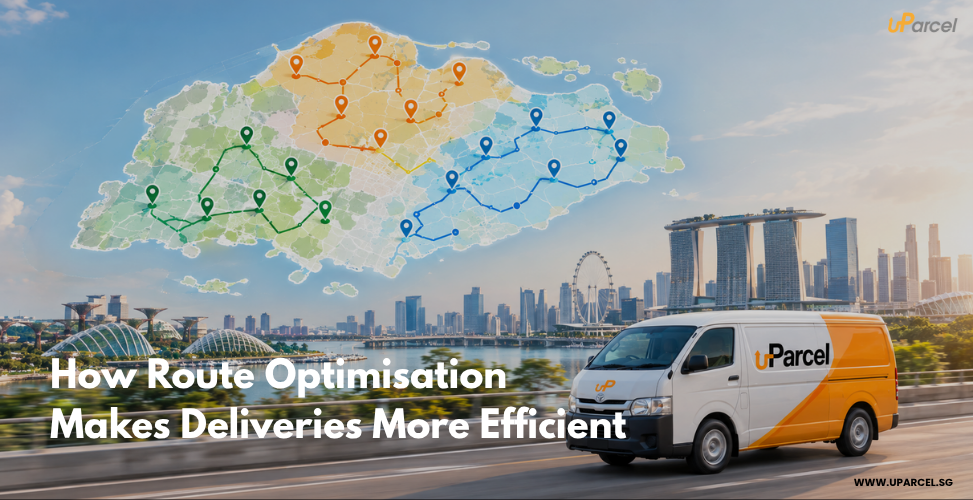
How Route Optimization Cuts Delivery Costs for Businesses with Multiple Daily Drops
If your business is making 20, 50, or 100+ deliveries a day across Singapore, the sequence of those deliveries is either money saved or money wasted. Two businesses with identical order volumes and identical delivery destinations can pay vastly different amounts per drop based entirely on how those deliveries are sequenced, grouped, and dispatched. The difference is route optimization: the practice of organizing delivery stops in a sequence that minimizes total distance, time, and cost while meeting customer delivery expectations. For businesses running their own delivery fleet, route optimization is a deliberate operational decision that requires planning tools and discipline. For businesses using a third-party courier, it is often built into the network but only if the courier's infrastructure is designed for multi-drop efficiency at scale. This article explains how route optimization works, what it costs to get it wrong, and what to look for when choosing a delivery partner for a business with multiple daily drops in Singapore. What Is Route Optimization? Route optimization is the process of determining the most efficient sequence and path for a set of delivery stops minimizing total distance traveled, time spent, and cost incurred, while respecting delivery time windows and vehicle capacity. It is distinct from simple navigation. A navigation app like Google Maps finds the fastest path between two points. Route optimization solves a more complex problem: given 40 delivery stops, a two-hour delivery window for some of them, and a vehicle that can carry a maximum load, what is the sequence that minimizes total cost? The variables that route optimization has to balance simultaneously include: Geographic clustering: grouping nearby stops to reduce backtracking Time windows: ensuring time-sensitive deliveries reach recipients within the promised window Vehicle capacity: matching load size to vehicle type for each run Traffic patterns: routing around known congestion periods on Singapore's road network Drop density: areas with more stops per square kilometer cost less per delivery than dispersed single drops When these variables are handled well, cost per drop falls. When they are not — when drivers are crisscrossing the island, backtracking to areas they already passed, or running half-full vehicles, every inefficiency multiplies across the entire day's deliveries. The Real Cost of an Unoptimised Delivery Route Businesses that have not thought systematically about route optimisation often underestimate how much inefficiency is embedded in their current operations. The costs appear in several places: Unnecessary Distance and Fuel An unoptimised route covering the same stops as an optimised one can add 20–35% more distance in a single run. Over a fleet of vehicles operating five days a week, that additional distance translates directly into fuel spend, vehicle wear, and driver hours, none of which appear on a per-delivery invoice but all of which appear on a monthly cost sheet. Failed Deliveries and Redelivery Costs A failed delivery, where a recipient is unavailable, the address is inaccessible, or the time window is missed, is one of the most expensive events in last-mile logistics. The original delivery attempt costs the same as a successful one. The redelivery costs the same again. And in Singapore's ecommerce marketplace environment, a failed delivery frequently triggers a negative seller rating or a dispute. Failed deliveries are often a sequencing problem. When delivery windows are not respected because routes are planned without accounting for them, recipients who expected a morning delivery get a driver showing up at 6pm and nobody is home. Driver Time as a Hidden Cost For businesses running their own delivery staff, driver time is a fixed cost that does not disappear when routes run long. A driver spending two hours completing a run that should take 90 minutes is not a route that cost 33% more fuel, it is a driver who is unavailable for the next run during those 30 minutes. Across a team of drivers, unoptimised routes consistently compress the number of deliveries possible in a working day. The Key Variables That Determine Cost Per Drop in Singapore Understanding what drives cost per drop gives businesses the framework to evaluate both their own operations and the partners they work with. Drop density The most significant driver of cost per drop is how many stops a vehicle can service within a defined geographic area. A driver covering 10 drops in Tampines in one run has a far lower cost per drop than a driver covering 10 drops spread across Tampines, Jurong, and Woodlands. In Singapore's compact urban geography, tight geographic clustering is one of the highest-leverage optimisations available. Vehicle-to-drop matching Using a van for three small parcel drops, or a motorcycle for a large, heavy delivery, both represent a mismatch between vehicle cost and delivery requirement. Optimised operations match vehicle type, motorcycle, car, van, lorry to the load size and delivery characteristics of each run. uParcel's network includes motorcycles, cars, vans, and lorries, allowing each delivery to be matched to the appropriate vehicle type rather than defaulting to a single mode regardless of parcel size. Time-window compliance Deliveries that carry a specified time window (e.g., same-day before 6pm, or a specific two-hour slot) must be sequenced so that the driver reaches those stops within the window. When time-constrained stops are sequenced poorly, placed too late in a route, or too far from the previous stop, drivers either miss the window or rush to meet it inefficiently. Batching and dispatch timing For businesses processing orders continuously throughout the day, the timing of dispatch runs matters. Batching all morning orders into a single optimised run is more efficient than dispatching three separate runs as orders trickle in. The trade-off is delivery speed, earlier batching means longer wait times for the first orders in the batch. The right balance depends on what your customers have been promised. Own Fleet vs Outsourced Courier: The Route Optimisation Trade-Off Businesses with multiple daily drops face a foundational choice: run their own fleet and manage routing internally, or use a third-party courier whose network handles the routing problem. Running your own fleet gives maximum control over delivery scheduling and sequencing but places the full burden of route optimisation on your own operations team. This requires either dedicated routing software (with the associated cost and learning curve) or significant manual planning time daily. It also means your delivery cost structure is fixed: vehicles, drivers, insurance, and maintenance are sunk costs whether the routes are optimised or not. Using a third-party courier transfers the routing problem to a network that is already optimised, but only if the courier's infrastructure is genuinely built for multi-drop efficiency at scale. A courier that dispatches individual drivers for single drops is not providing a routing advantage; it is just shifting your fixed costs to variable ones. For businesses with consistent multi-drop volumes in Singapore, the decision hinges on whether the volume justifies the overhead of maintaining and optimising a dedicated fleet. For most SMEs and mid-size businesses, the variable cost of a purpose-built courier network is more efficient than the fixed cost of an internal fleet that requires ongoing route optimisation investment to match the same efficiency. How uParcel's Network Is Built for Multi-Drop Efficiency uParcel's delivery network is designed for businesses with consistent, volume-based delivery needs across Singapore not just one-off single drops. Key features relevant to multi-drop businesses: Island-wide coverage with no area surcharges uParcel covers all parts of Singapore on the same delivery network, Jurong, Woodlands, Changi, and everywhere in between. Businesses do not pay a premium for drops in specific zones or face coverage gaps that require a second provider. Multiple vehicle types matched to load From motorcycles for small parcels to vans and lorries for bulky or high-volume runs, uParcel matches vehicle type to delivery requirement, eliminating the vehicle-mismatch inefficiency that inflates cost per drop for businesses using a one-size-fits-all fleet. Same-day delivery across all drops For businesses whose customers expect same-day delivery, uParcel's same-day network covers Singapore-wide drops dispatched within the service window. This removes the trade-off between delivery speed and route efficiency that businesses managing their own fleet often face. Transparent per-drop pricing Rather than absorbing the hidden cost variability of an internal fleet, businesses using uParcel pay per delivery on a transparent rate structure. For businesses with consistent multi-drop volumes, this makes total delivery cost predictable and comparable across months. View uParcel's delivery rates to estimate cost per drop based on your delivery profile. What to Look for in a Delivery Partner for Multi-Drop Businesses For businesses evaluating a courier partner or reconsidering their current one, route optimisation capability is one of several criteria that determine whether the partnership will be cost-efficient at scale. 01. Coverage without gaps A courier that cannot reliably serve all of Singapore forces you to maintain backup arrangements for uncovered zones. Every exception in coverage adds operational complexity and cost. 02. Scalability on volume The partner needs to be able to absorb volume spikes, peak sale periods, campaign launches, seasonal demand without degrading delivery performance or requiring significant advance notice. A courier network that works well at 50 drops per day but struggles at 200 is not a long-term fit for a growing business. 03. API integration for automated dispatch For businesses processing high volumes, manual order submission to a courier is itself an inefficiency. API integration allows orders to be dispatched automatically as they are placed removing a daily administrative step and reducing the risk of missed or delayed bookings. uParcel's same-day courier service includes API integration for businesses that need automated, high-volume dispatch. 04. Tracking and proof of delivery Multi-drop operations generate a high volume of recipient queries. A courier that provides real-time tracking and digital proof of delivery reduces the time your team spends responding to "where is my order" contacts, a hidden administrative cost that scales with delivery volume. The Route Is Part of the Cost Route optimisation is not a logistics detail, it is a direct cost lever for any business making multiple deliveries every day. Unoptimised routes add distance, driver time, vehicle cost, and failed delivery risk to every run. Optimised routes compress all of those costs without compromising delivery speed or coverage. For businesses managing their own fleet, the investment in route planning whether through software or disciplined manual scheduling pays back in reduced operating cost per drop. For businesses using a courier, the equivalent question is whether the network they are using is genuinely built to deliver multi-drop efficiency or whether it is simply processing individual orders one at a time. The right answer depends on your volume, your delivery commitments to customers, and the total cost of each option at your current and projected scale. For businesses with regular multi-drop delivery needs in Singapore, view uParcel's delivery rates or reach out to the team through the same-day courier service page to discuss a delivery arrangement that fits your volume and schedule.
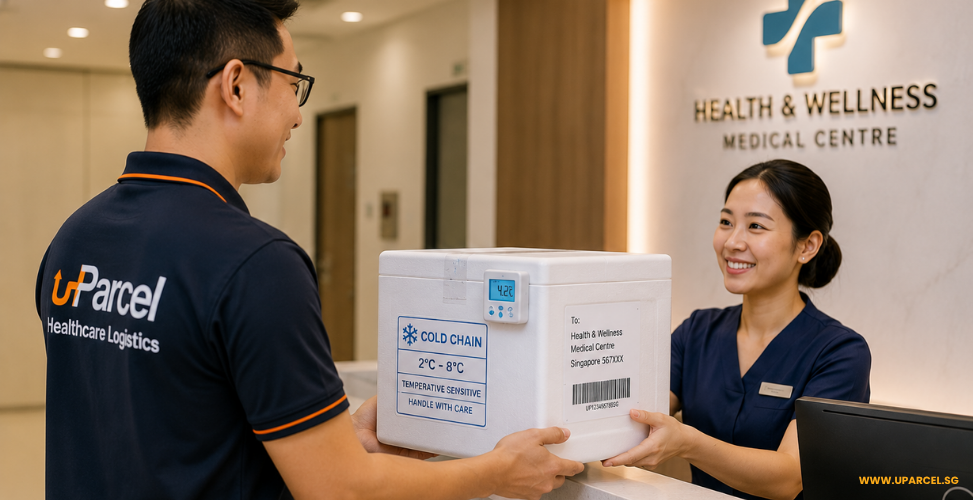
Cold Chain Delivery for Healthcare in Singapore: What Actually Holds Up
A healthcare shipment can leave the warehouse at the correct temperature and still arrive compromised. The delivery leg from the warehouse to the clinic, laboratory, pharmacy, or patient is the hardest part of the cold chain to control. It is the most exposed to peak-hour traffic delays, failed first-attempt hand-offs, building access restrictions, and errors at the receiving end. For Singapore's healthcare distributors, clinic operators, and medical device companies, getting this right is not a logistics preference. Often, it is a regulatory requirement. Who Needs Healthcare Cold Chain Delivery in Singapore? Healthcare cold chain delivery covers multiple distinct operations, each with different requirements: 🏥 Pharmaceutical distributors delivering HSA-regulated medications to clinics, pharmacies, and hospitals 🔬 Diagnostic labs transporting clinical samples and reagents within strict temperature and viability windows 💊 Compounding pharmacies delivering patient-specific preparations from preparation through to hand-off 🩺 Medical device companies moving GDPMDS-regulated devices with documented chain of custody 🏨 Hospital procurement teams receiving recurring inbound supply across multiple product temperature classes 💉 Clinical trial teams handling investigation medicinal products with strict protocol documentation requirements These audiences share one thing: temperature-sensitive delivery. But they do not share packaging specification, regulatory standard, allowable excursion window, or delivery record requirement. A delivery approach that works for one may fall short for another. What Singapore's Regulatory Environment Requires? Singapore's healthcare sector operates under specific regulatory frameworks that directly affect the delivery leg not just storage. GDPMDS: Good Distribution Practice of Medical Devices Singapore GDPMDS is the Singapore standard for the handling, storage, and distribution of medical devices. It covers the entire supply chain from supplier to end user including every last-mile delivery. Key requirements that apply to delivery: Documented chain of custody at every hand-off point Temperature monitoring for devices with defined transport conditions Traceable delivery records, not just a final delivery status notification Qualified personnel handling and transporting regulated devices Medical device distributors operating under Singapore's Medical Devices Act must work with partners who understand GDPMDS requirements not simply a provider with a refrigerated vehicle. HSA Guidelines for Pharmaceutical Products For pharmaceutical products, HSA guidelines require that distribution conditions maintain product integrity throughout the supply chain. For the delivery leg, this means: Products must be delivered within validated packaging for the defined transport duration Temperature excursions must be documented and assessed, not resolved quietly or noted only informally Proof of delivery must confirm the right product reached the right recipient in the right condition A delivery record that only shows "delivered at 2:14 PM" does not meet this standard. The Four Things Healthcare Cold Chain Delivery Must Get Right 1. Temperature - Maintained Throughout, Not Just at Departure Temperature control starts at packaging and ends at the moment of hand-off. The vehicle being cold is necessary but not sufficient. Common failure points that have nothing to do with the vehicle: Shipments sitting at an uncontrolled staging area after packing Extended wait in a building lobby between driver arrival and recipient response Unloading at a hospital loading dock during midday heat Re-delivery attempts where the original packaging has already been time-stressed from the first attempt Packaging must be validated for the full realistic journey, including wait times, re-delivery risks, and seasonal temperature conditions, not only the shortest-case route. 2. Time - Delivery Windows Matched to Product Specification Not all cold chain products share an allowable exposure window. A clinical sample may have a two-hour viability window A refrigerated biologic may remain stable for 12 hours in validated packaging A medical device may have no temperature restriction but a strict custody timeline Matching delivery windows to product classes is an operational decision, not an estimation. It requires: 📋 Product-level handling instructions visible to dispatch teams before collection 🕐 Cut-off times that account for full journey duration including Singapore's building access procedures 📍 Route planning that factors in receiving hours, not just driving time 3. Custody - Documented at Every Hand-off For GDPMDS-regulated devices and HSA-regulated pharmaceuticals, a chain of custody must be recorded at every stage: Who collected the shipment from the warehouse and when When it departed and when it arrived at the facility Who received it, confirmed it, and accepted it Any exception, delay, or deviation that occurred during transit A delivery network that only provides a final "delivered" notification does not meet GDPMDS or HSA distribution standards. 4. Evidence - Records That Hold Up Under Review Healthcare delivery records must be accessible, specific, and retained for review when needed. This includes: Proof of delivery with named recipient confirmation Timestamp at departure and at hand-off Temperature data where monitoring is required by the product specification Exception documentation if a delay or deviation occurred When a quality team, auditor, or regulator asks what happened to a specific shipment, the answer should come from a system, not from a chain of manual notes, driver chat messages, or phone calls. Singapore-Specific Challenges That Break Healthcare Delivery Generic cold chain guidance does not address what actually makes Singapore healthcare delivery hard. 01. Building Access and Receiving Hour Restrictions Major hospitals, specialist centers, and polyclinics operate with specific loading bay hours, access authorization requirements, and receiving procedures. A driver who arrives outside the receiving window, at the wrong entry point, or without prior clearance does not simply wait, the shipment may be returned, extending time outside optimal storage and triggering a re-delivery that adds further risk. Reliable healthcare delivery to Singapore's medical facilities requires: Pre-confirmed receiving windows for recurring routes Recipient notification before arrival, not just a tracking link sent after departure Correct access instructions for controlled-entry facilities A defined process for first-attempt failures that does not leave the product in an uncontrolled state 02. Peak-Hour Impact on Journey Duration The same route from a northeastern Singapore warehouse to a Novena medical cluster looks completely different at 9 a.m. versus 5:30 p.m. For time-sensitive healthcare shipments, that difference can push a product outside its allowable excursion window. Cut-off times for same-day healthcare delivery in Singapore must account for realistic peak-hour conditions, not theoretical fastest-case routing. 03. Multiple Facility Types on One Route A single healthcare distribution run in Singapore may cover a restructured hospital, three private clinics, a specialist center, and a retail pharmacy each with different receiving procedures, floor access, contact requirements, and receiving windows. Without route-level operational knowledge of these facilities, delays stack across the run and put later stops at risk. What to Ask When Choosing a Healthcare Cold Chain Delivery Partner Vehicle capability is the starting point, not the full evaluation criteria. Ask these questions before committing to a partner: On compliance: Do they understand GDPMDS requirements for chain of custody documentation? Can they provide delivery records that meet HSA pharmaceutical distribution standards? How are temperature excursions documented and escalated? On operations: Do they have established routes to Singapore healthcare facilities, including access credentials and receiving window intelligence? What happens when a first-attempt delivery fails? Is there a defined re-delivery protocol? Are cut-off times calculated around realistic journey duration or optimistic drive-time estimates? On integration: Do they offer temperature-controlled warehousing and fulfillment alongside last-mile delivery or will your product pass through an uncontrolled hand-off between separate providers? Can they support same-day delivery across all parts of Singapore, including healthcare and medical districts? Are delivery records accessible from a system, or does retrieval require a manual request? A partner who can answer these questions specifically, not in general terms, is a materially different conversation from one who simply lists cold vehicle availability. Integrated Operations Reduce the Biggest Risk The most common gap in healthcare cold chain delivery is the break between separate service providers. When warehouse storage, order fulfillment, and last-mile delivery are managed by different parties, the chain of custody becomes difficult to document completely. An exception in one system may not be visible to the team managing the next stage. A delay at fulfillment can push a driver past a receiving window without the delivery team knowing it has happened. An integrated partner, one who manages the full flow from GDPMDS-compliant pharma storage through pick-and-pack fulfillment to same-day last-mile delivery removes those gaps and provides a single, traceable record from inventory to delivered. For healthcare distributors in Singapore managing recurring deliveries across clinics, labs, and hospitals, that integration is where delivery reliability actually lives. Build Healthcare Delivery Around Measurable Standards Cold chain delivery for healthcare is not a premium service reserved for special shipments. It is an operating standard that should apply consistently to every product class that requires it. For Singapore's healthcare distributors and medical companies, the goal is straightforward: the right product, at the right temperature, to the right recipient, with a record that holds up under review. That standard is achievable but only with a partner who holds it operationally, not just on paper. If you're managing healthcare cold chain delivery in Singapore and want to explore what an integrated storage, fulfillment, and last-mile solution looks like for your distribution requirements, speak with uParcel's team to see what applies to your product category and delivery network.
Same-Day vs Next-Day Delivery for Singapore Ecommerce: Which Is Worth the Cost?
Same-Day vs Next-Day Delivery for Singapore Ecommerce: Which Is Worth the Cost? /* ── Chart card styles (scoped to .uparcel-chart-*) ── */ .uparcel-chart-wrap { margin: 40px 0; font-family: 'DM Sans', -apple-system, BlinkMacSystemFont, sans-serif; } .uparcel-chart-wrap *, .uparcel-chart-wrap *::before, .uparcel-chart-wrap *::after { box-sizing: border-box; } .uparcel-chart-card { background: #ffffff; border-radius: 20px; border: 1px solid rgba(0,0,0,0.08); overflow: hidden; } .upc-header { padding: 28px 32px 20px; border-bottom: 1px solid rgba(0,0,0,0.08); } .upc-eyebrow { font-size: 11px; font-weight: 500; letter-spacing: .1em; color: #A8A7A2; text-transform: uppercase; margin: 0 0 5px; } .upc-header h3 { font-family: 'DM Serif Display', serif; font-size: 22px; font-weight: 400; line-height: 1.2; color: #1A1916; margin: 0 0 5px; } .upc-header p { font-size: 13px; color: #6B6A65; margin: 0; } .upc-totals { display: grid; grid-template-columns: 1fr 1fr; border-bottom: 1px solid rgba(0,0,0,0.08); } .upc-total-cell { padding: 18px 32px; position: relative; } .upc-total-cell:first-child { border-right: 1px solid rgba(0,0,0,0.08); } .upc-total-cell .bar-label { font-size: 11px; font-weight: 500; letter-spacing: .07em; text-transform: uppercase; color: #A8A7A2; margin: 0 0 3px; } .upc-total-cell .big-num { font-family: 'DM Serif Display', serif; font-size: 32px; line-height: 1; margin: 0 0 3px; } .upc-total-cell.sd .big-num { color: #D85A30; } .upc-total-cell.nd .big-num { color: #534AB7; } .upc-total-cell .verdict { font-size: 12px; font-weight: 500; margin: 0; } .upc-total-cell.sd .verdict { color: #1D9E75; } .upc-total-cell.nd .verdict { color: #D85A30; } .upc-seg-strip { display: flex; border-bottom: 1px solid rgba(0,0,0,0.08); overflow-x: auto; scrollbar-width: none; } .upc-seg-strip::-webkit-scrollbar { display: none; } .upc-seg-btn { flex: 1; min-width: 110px; padding: 12px 10px; border: none; background: transparent; cursor: pointer; display: flex; flex-direction: column; align-items: center; gap: 5px; border-right: 1px solid rgba(0,0,0,0.08); transition: background .15s; position: relative; } .upc-seg-btn:last-child { border-right: none; } .upc-seg-btn:hover { background: #faf9f7; } .upc-seg-btn.dimmed { opacity: .35; } .upc-seg-btn .upc-swatch { width: 20px; height: 6px; border-radius: 3px; } .upc-seg-btn .upc-seg-name { font-size: 10px; font-weight: 500; color: #6B6A65; text-align: center; line-height: 1.3; } .upc-seg-btn .upc-check { position: absolute; top: 7px; right: 7px; width: 13px; height: 13px; border-radius: 50%; border: 1.5px solid rgba(0,0,0,0.15); background: white; display: flex; align-items: center; justify-content: center; transition: all .15s; } .upc-seg-btn.active .upc-check { background: #1A1916; border-color: #1A1916; } .upc-seg-btn.active .upc-check::after { content: ''; width: 5px; height: 3px; border-left: 1.5px solid white; border-bottom: 1.5px solid white; transform: rotate(-45deg) translate(0.5px, -1px); display: block; } .upc-chart-area { padding: 24px 32px 8px; } .upc-chart-inner { position: relative; width: 100%; height: 300px; } .upc-breakdown { margin: 0 32px 24px; border: 1px solid rgba(0,0,0,0.08); border-radius: 12px; overflow: hidden; } .upc-brow { display: grid; grid-template-columns: 1fr 100px 100px; align-items: center; padding: 11px 14px; border-bottom: 1px solid rgba(0,0,0,0.06); transition: background .12s; } .upc-brow:last-child { border-bottom: none; } .upc-brow:hover { background: #faf9f7; } .upc-brow.dimmed { opacity: .3; } .upc-brow.upc-hdr { background: #f7f6f4; } .upc-brow.upc-hdr:hover { background: #f7f6f4; } .upc-row-label { display: flex; align-items: center; gap: 8px; font-size: 12px; color: #1A1916; } .upc-row-dot { width: 9px; height: 9px; border-radius: 50%; flex-shrink: 0; } .upc-row-val { text-align: right; font-size: 12px; font-weight: 500; font-variant-numeric: tabular-nums; } .upc-row-val.sd { color: #D85A30; } .upc-row-val.nd { color: #534AB7; } .upc-col-h { text-align: right; font-size: 10px; font-weight: 500; color: #A8A7A2; letter-spacing: .05em; text-transform: uppercase; } .upc-col-h.left { text-align: left; } .upc-insight { margin: 0 32px 24px; background: #F2FBF6; border-radius: 12px; padding: 14px 18px; display: flex; align-items: flex-start; gap: 12px; } .upc-icon { width: 30px; height: 30px; background: #1D9E75; border-radius: 8px; flex-shrink: 0; display: flex; align-items: center; justify-content: center; } .upc-icon svg { width: 14px; height: 14px; stroke: white; fill: none; stroke-width: 2.5; stroke-linecap: round; stroke-linejoin: round; } .upc-insight-text { font-size: 12px; color: #085041; line-height: 1.5; margin: 0; } .upc-insight-text strong { font-weight: 500; } .upc-footer { border-top: 1px solid rgba(0,0,0,0.08); padding: 12px 32px; display: flex; align-items: center; justify-content: space-between; } .upc-footer p { font-size: 10px; color: #C8C7C2; margin: 0; } .upc-reset { font-size: 11px; font-weight: 500; color: #6B6A65; background: none; border: 1px solid rgba(0,0,0,0.1); border-radius: 6px; padding: 4px 10px; cursor: pointer; transition: all .15s; font-family: inherit; } .upc-reset:hover { background: #f7f6f4; color: #1A1916; } .upc-tip { display: none; position: fixed; background: #1A1916; color: white; border-radius: 10px; padding: 11px 13px; font-size: 12px; pointer-events: none; z-index: 9999; max-width: 210px; line-height: 1.4; transform: translate(-50%, calc(-100% - 10px)); font-family: 'DM Sans', sans-serif; } .upc-tip .tt { font-weight: 500; font-size: 13px; margin: 0 0 3px; } .upc-tip .tv { font-weight: 500; font-size: 15px; margin: 0 0 3px; } .upc-tip .tn { color: rgba(255,255,255,.6); font-size: 11px; margin: 0; } .upc-tip::after { content: ''; position: absolute; top: 100%; left: 50%; transform: translateX(-50%); border: 6px solid transparent; border-top-color: #1A1916; } @media (max-width: 560px) { .upc-header, .upc-total-cell, .upc-chart-area, .upc-breakdown, .upc-insight, .upc-footer { padding-left: 18px; padding-right: 18px; } .upc-breakdown { margin-left: 12px; margin-right: 12px; } .upc-insight { margin-left: 12px; margin-right: 12px; } .upc-header h3 { font-size: 18px; } .upc-total-cell .big-num { font-size: 26px; } } Every ecommerce seller in Singapore hits this question eventually. A customer places an order. You can get it to them today for a premium. Or tomorrow, for less. Which do you choose? Also, more importantly: does it actually matter to the customer enough to justify the cost difference? The answer isn't a simple yes or no. It depends on what you sell, who's buying, and what stage your business is at. This guide breaks it down clearly, so you can build a delivery strategy that makes commercial sense, not just a fast one. First: What Each Option Actually Means in Singapore Same-Day Delivery Exactly what it sounds like, the order is picked up and delivered within the same calendar day it was placed. In Singapore, same-day delivery typically means: Order placed before the cut-off time (usually mid-morning to early afternoon) Delivered within hours, most providers complete same-day deliveries by evening Available island-wide, though some providers have coverage gaps in certain areas Some providers go further with express same-day options, 1-hour or 3-hour delivery windows for truly urgent orders. Next-Day Delivery Orders placed today are delivered the following business day. In Singapore, next-day delivery typically means: More flexible cut-off times — orders placed late in the evening still qualify Lower per-delivery cost compared to same-day Easier to batch and route efficiently — providers can consolidate runs overnight Standard for most marketplace platform SLAs on Shopee and Lazada The Real Cost Comparison (It's Not Just the Delivery Fee) This is where most sellers make the mistake. They compare the delivery fee of same-day versus next-day and stop there. But the actual cost of your delivery choice is more than the courier charge. What adds to the real cost of next-day delivery: "Where's my order?" enquiries — buyers in Singapore are accustomed to fast fulfillment. A next-day delivery that arrives late on day two generates support tickets Abandoned carts — research from Baymard Institute consistently shows that slow delivery options at checkout are a top reason buyers don't complete purchases Higher return rates for time-sensitive products — if the product was needed today and arrived tomorrow, the buyer may no longer want it What adds to the real cost of same-day delivery: Higher per-parcel courier fee — same-day is premium-priced across all providers Tighter cut-off management — you need warehouse or fulfillment operations ready to dispatch quickly, which is an operational overhead Not always necessary — paying for same-day on a non-urgent order is money with no return Singapore ecommerce · 2026 cost analysis Same-day vs next-day: total cost of delivery Toggle each cost component to see how the true cost shifts — beyond just the courier fee. Same-day total 64 Lower true cost Next-day total 77 Higher hidden costs Cost component Same-day Next-day Same-day costs less overall. Despite a higher courier fee, same-day delivery eliminates most hidden costs — reducing support enquiries, cart drop-off, and returns while driving stronger repeat purchase rates. uparcel.sg · Toggle components to explore the full cost picture Reset all (function() { var SEG = [ { key:'delivery', shortLabel:'Delivery fee', label:'Delivery fee', color:'#D85A30', sd:45, nd:20, sdNote:'Higher courier premium', ndNote:'Lower base courier cost', note:'Premium courier rate for same-day versus standard next-day shipping' }, { key:'cs', shortLabel:'CS cost', label:'Customer service cost', color:'#BA7517', sd:8, nd:22, sdNote:'Fewer WISMO enquiries', ndNote:'Higher support volume', note:'Volume of "where is my order?" enquiries drops sharply with same-day' }, { key:'cart', shortLabel:'Cart abandon', label:'Cart abandonment risk', color:'#7F77DD', sd:5, nd:25, sdNote:'Low abandonment at checkout', ndNote:'High drop-off without speed', note:'Shoppers convert at checkout when fast delivery is offered' }, { key:'returns', shortLabel:'Returns', label:'Return rate impact', color:'#888780', sd:6, nd:18, sdNote:'Low return rate', ndNote:'Higher returns on delay', note:'Time-sensitive orders returned far less when delivered same-day' }, { key:'repeat', shortLabel:'Repeat LTV', label:'Repeat purchase benefit', color:'#1D9E75', sd:20, nd:8, sdNote:'Strong LTV uplift', ndNote:'Weaker satisfaction signal', note:'Post-delivery satisfaction drives higher lifetime value and repeat orders' }, ]; var hidden = [false,false,false,false,false]; function sdTotal(){ return SEG.reduce(function(a,s,i){ return a+(hidden[i]?0:s.sd); },0); } function ndTotal(){ return SEG.reduce(function(a,s,i){ return a+(hidden[i]?0:s.nd); },0); } // Build toggles var strip = document.getElementById('upc-seg-strip'); SEG.forEach(function(s,i){ var btn = document.createElement('button'); btn.className = 'upc-seg-btn active'; btn.id = 'upc-btn-'+i; btn.innerHTML = ''+s.shortLabel+''; btn.onclick = function(){ upcToggle(i); }; strip.appendChild(btn); }); // Build table var tbody = document.getElementById('upc-breakdown-body'); SEG.forEach(function(s,i){ var row = document.createElement('div'); row.className = 'upc-brow'; row.id = 'upc-brow-'+i; row.innerHTML = ''+s.label+'' +''+s.sd+'' +''+s.nd+''; tbody.appendChild(row); }); // Chart var ctx = document.getElementById('upcCostChart').getContext('2d'); var chart = new Chart(ctx, { type: 'bar', data: { labels: ['Same-day','Next-day'], datasets: SEG.map(function(s,i){ return { label: s.label, data: [s.sd, s.nd], backgroundColor: s.color, borderWidth: 0, borderRadius: i===SEG.length-1 ? {topLeft:5,topRight:5,bottomLeft:0,bottomRight:0} : 0, borderSkipped: false }; }) }, options: { responsive: true, maintainAspectRatio: false, plugins: { legend: { display: false }, tooltip: { enabled: false, external: function(context){ var tip = document.getElementById('upc-tip'); if(context.tooltip.opacity===0){ tip.style.display='none'; return; } var dp = context.tooltip.dataPoints && context.tooltip.dataPoints[0]; if(!dp) return; var s = SEG[dp.datasetIndex]; var bi = dp.dataIndex; var val = bi===0 ? s.sd : s.nd; var lbl = bi===0 ? 'Same-day' : 'Next-day'; var nt = bi===0 ? s.sdNote : s.ndNote; document.getElementById('upc-tip-title').textContent = s.label+' — '+lbl; document.getElementById('upc-tip-val').textContent = val+' index units'; document.getElementById('upc-tip-note').textContent = nt+'. '+s.note; var el = context.chart.canvas; var rect = el.getBoundingClientRect(); tip.style.display = 'block'; tip.style.left = (rect.left+window.scrollX+context.tooltip.caretX)+'px'; tip.style.top = (rect.top+window.scrollY+context.tooltip.caretY)+'px'; } } }, scales: { x: { stacked:true, grid:{display:false}, border:{display:false}, ticks:{font:{size:13,weight:'500'},color:'#6B6A65'} }, y: { stacked:true, beginAtZero:true, max:115, grid:{color:'rgba(0,0,0,0.05)',drawTicks:false}, border:{display:false}, ticks:{font:{size:11},color:'#A8A7A2',padding:8} } }, animation: { duration:350, easing:'easeInOutQuart' }, interaction: { mode:'nearest', axis:'y', intersect:true } } }); document.getElementById('upcCostChart').addEventListener('mouseleave', function(){ document.getElementById('upc-tip').style.display='none'; }); function upcUpdateTotals(){ var sd=sdTotal(), nd=ndTotal(); document.getElementById('upc-sd-num').textContent = sd; document.getElementById('upc-nd-num').textContent = nd; var sv=document.getElementById('upc-sd-verdict'), nv=document.getElementById('upc-nd-verdict'); if(sdSame-day costs '+(nd-sd)+' units less overall. Despite a higher courier fee, same-day delivery eliminates most hidden costs — reducing support enquiries, cart drop-off, and returns while driving stronger repeat purchase rates.'; } else if(ndNext-day is cheaper with current selection. Toggle more components to see the full picture.'; } else { sv.textContent='Equal cost'; sv.style.color='#888780'; nv.textContent='Equal cost'; nv.style.color='#888780'; document.getElementById('upc-insight').innerHTML='Costs are equal with current selection. The full picture emerges when all five components are active.'; } } window.upcToggle = function(i){ hidden[i]=!hidden[i]; document.getElementById('upc-btn-'+i).classList.toggle('active',!hidden[i]); document.getElementById('upc-btn-'+i).classList.toggle('dimmed',hidden[i]); document.getElementById('upc-brow-'+i).classList.toggle('dimmed',hidden[i]); chart.data.datasets[i].data = hidden[i] ? [0,0] : [SEG[i].sd,SEG[i].nd]; chart.update(); upcUpdateTotals(); }; window.upcResetAll = function(){ hidden.fill(false); SEG.forEach(function(_,i){ document.getElementById('upc-btn-'+i).classList.add('active'); document.getElementById('upc-btn-'+i).classList.remove('dimmed'); document.getElementById('upc-brow-'+i).classList.remove('dimmed'); chart.data.datasets[i].data=[SEG[i].sd,SEG[i].nd]; }); chart.update(); upcUpdateTotals(); }; upcUpdateTotals(); })(); When Same-Day Delivery Is Worth Every Dollar There are specific scenarios where same-day isn't a cost, it's a conversion tool. 01.🎁 Gifting and occasion-based purchases Birthdays, anniversaries, last-minute celebrations. A buyer who needs a gift today will pay more for fast delivery and will abandon the purchase entirely if same-day isn't offered. 02. 🍱 Food, perishables, and fresh products Cold chain or fresh products that degrade over time need same-day delivery. Next-day isn't a viable option; it's a product quality failure. 03. 💊 Health, medical, and urgent essentials Medication, supplements, baby products, personal care. When a buyer has an immediate need, speed is part of the product value. 04. 📱 High-consideration purchases with instant gratification Electronics, premium beauty, and lifestyle products with a high emotional purchase component. The buyer is excited now; same-day delivery preserves that excitement and reduces buyer's remorse returns. 05. 🏪 Local retailers competing with physical stores If a nearby physical store has the same product, a next-day online delivery loses to a same-afternoon in-store experience. Same-day delivery is the only way to be competitive with physical retail. When Next-Day Delivery Is the Smarter Choice Next-day isn't the default "cheap option" for many product types and buyer profiles; it's the right choice. 01. Non-urgent, planned purchases Household goods, stationery, books, and apparel products where the buyer has already decided and isn't in a rush. Same-day adds cost without adding value. 02. B2B and bulk orders Businesses ordering stock or supplies plan. Next-day delivery at a lower cost is usually preferred over same-day at a premium. 03. High-volume sellers managing margins If you're dispatching 200+ orders a day across a range of product types, offering same-day on everything may not be financially viable. Segmenting same-day for premium or urgent orders, next-day for standard, is a smarter margin strategy. 04. Off-peak, non-seasonal stock Items with no time sensitivity and long shelf lives don't need premium delivery. Save the same-day budget for the products and seasons where it drives real impact. What Singapore Buyers Actually Expect Singapore consumers are by regional standards among the most demanding when it comes to delivery speed. According to Shopee Singapore's seller data and SLA requirements, sellers are expected to ship within 2 business days of order confirmation to maintain healthy performance scores. Consistently fast fulfilment directly affects your search visibility on the platform. Meta and Bain & Company's e-Conomy SEA report consistently highlights delivery speed as one of the top drivers of repeat purchase behavior across Southeast Asian ecommerce with Singapore consumers ranking delivery reliability and speed among their most important purchase factors. The implication for Singapore sellers: next-day is the minimum expectation, not a premium feature. Same-day is the differentiator used strategically; it moves the needle on conversion and loyalty. The practical takeaway: most businesses should offer both next-day as the default, same-day as a paid upgrade or category-specific standard. Let high-AOV and time-sensitive products earn the premium. Let everything else move on next-day economics. How uParcel Handles Both Without Choosing One or the Other One of the more common frustrations Singapore ecommerce sellers have is being forced to use different courier providers for different delivery speeds and managing multiple integrations, pricing structures, and customer service contacts. uParcel's same-day delivery service and next-day door-to-door delivery operate under the same platform, so sellers can offer both options to customers without switching providers or managing separate accounts. Key points relevant to ecommerce sellers: Same-day delivery covering all parts of Singapore — no coverage gaps 1-hour and 3-hour express options for truly urgent orders Next-day door-to-door delivery for standard fulfilment at competitive rates 4.9 Google rating across 8,500+ reviews consistent delivery performance across both speed tiers Transparent pricing, check uParcel's delivery rates to model your actual cost per tier before deciding which to offer Having both under one provider also means your customer service experience is consistent — one tracking system, one support contact, and one relationship. The Bottom Line Same-day delivery is not always worth the cost. Next-day is not always good enough. The right answer depends on your product category, your buyer's intent, and your margin structure. What is clear: in Singapore's ecommerce market, delivery speed is not a detail it is part of the product experience. Sellers who offer fast, reliable delivery across the right order types consistently see better conversion rates, fewer returns, and stronger repeat purchase behaviour. Start by identifying which of your product categories genuinely benefit from same-day. Offer it there. Let next-day handle the rest. Then review the data after 90 days, it will tell you exactly where speed is moving the needle. If you want to see what same-day and next-day delivery actually costs across your order volume, uParcel's delivery rates page gives you transparent pricing without a sales call.